- 2025-12-23
What Is A Control Valve? How Does It Work?
What Are Control Valves Used For?
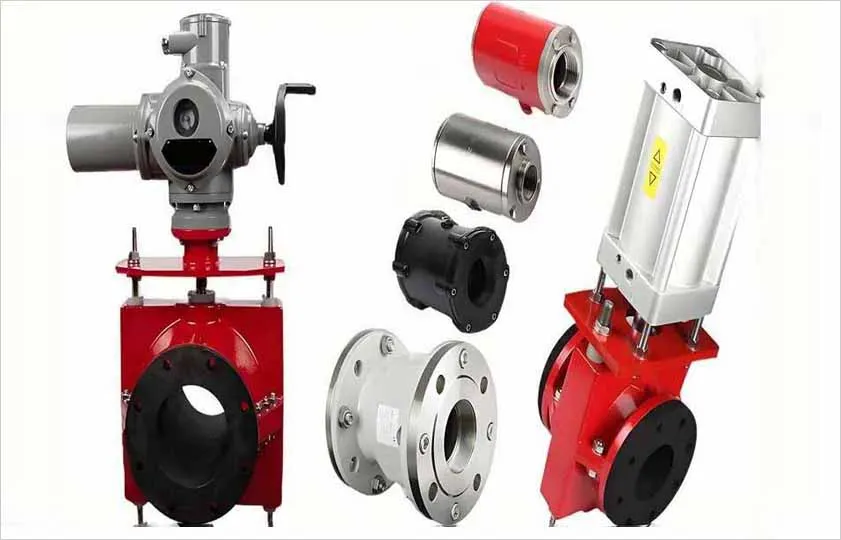
Control valves, as key control components in industrial automation systems, are widely used in the management of steam, water, air, various liquids, and special media. They achieve precise control of the process by adjusting the pressure, flow rate, temperature, or direction of the fluid.
A control valve assembly mainly consists of a valve body and an actuator, and can be equipped with accessories such as positioners and limit switches to enhance its functionality. Key performance parameters include flow capacity, dead zone, and control range.
Control Valve Working Principle
The core of a control valve lies in adjusting fluid parameters by changing the throttling area (i.e., opening) between the valve core and the valve seat. Based on the control medium and driving method, they can be mainly divided into the following categories:
Hydraulic Control Valves: As the "command center" of the hydraulic system, they control the hydraulic fluid through the displacement of the valve core.
Pressure Control Valves (such as relief valves): When the system pressure exceeds the preset pressure, the valve core opens to release pressure and maintain system pressure stability.
Flow Control Valves (such as throttle valves): By changing the flow area of the throttling orifice, they generate local resistance, thereby regulating the flow rate. Directional control valves (e.g., directional control valves): By switching the working position of the valve core, they change whether the hydraulic oil circuit is open or closed, and the direction of flow, thereby actuating the actuator (e.g., a hydraulic cylinder) to perform corresponding actions.
Temperature control valves: The system monitors the medium temperature in real time through a temperature sensor and compares it with a set value.
The generated temperature difference signal drives the actuator (e.g., an electric actuator or a temperature-controlled actuator), thereby adjusting the valve opening and changing the flow rate of the heating or cooling medium.
Self-operated differential pressure control valves: These operate using the pressure of the controlled medium itself, requiring no external power source.
Pressure sensing and balancing: The pressure-sensing diaphragm (or piston) inside the valve senses the pressure difference (ΔP) between the valve inlet and outlet and compares it with the preset force of the spring.
Automatic adjustment: When the actual differential pressure deviates from the set value (ΔPs), the diaphragm pushes the valve core to move: if ΔP > ΔPs, the valve opens wider to reduce the differential pressure;
if ΔP < ΔPs, the valve closes less to increase the differential pressure.
Stable Maintenance: Through this dynamic and continuous adjustment, the system pressure difference is kept stable near the set value, widely used in hydraulic balancing systems such as heating and air conditioning.
Control valves are diverse and used in various industries. Common classification methods are as follows:
By Structure and Principle:
This is the most common classification method, specifically including gate valves, globe valves, throttle valves, ball valves, butterfly valves, check valves, safety valves, pressure reducing valves, steam traps, regulating valves, etc.
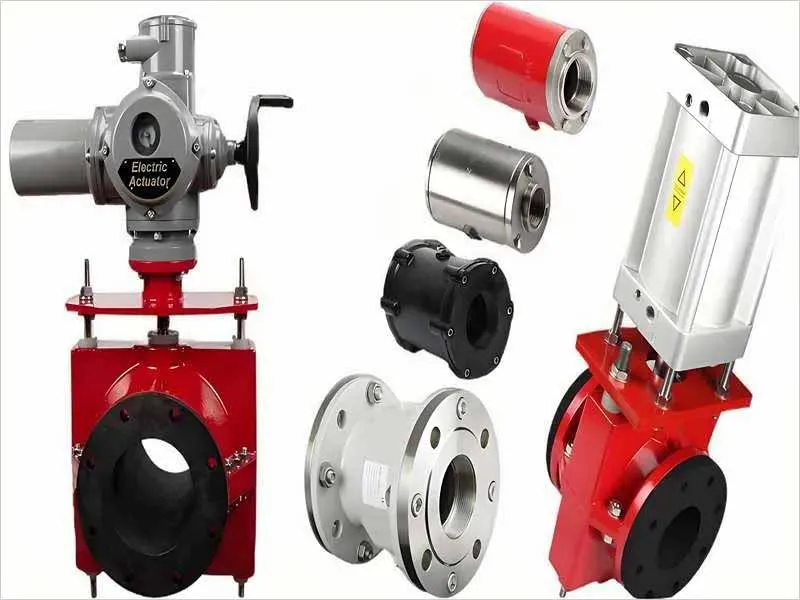
By Function and Application:
Regulating Valves: Used for precise control of parameters such as flow rate and pressure of the medium.
Shut-off Valves: Mainly used for connecting or disconnecting the medium in pipelines.
Safety Valves: Provide overpressure protection, automatically releasing pressure when it exceeds a limit.
Check Valves: Prevent backflow of the medium.
Diverter Valves: Used for the distribution, mixing, or separation of the medium.
By Pressure Rating: Can be divided into vacuum valves, low-pressure valves, medium-pressure valves, high-pressure valves, and ultra-high-pressure valves.
Control Valve Application Scenarios and How to Select Them? Control valves are fundamental to many industries, including petrochemicals, power energy, semiconductor manufacturing, hydrogen storage and transportation, and HVAC. In the control of heating and cooling coils, valve selection is crucial for both safety and energy efficiency:
Heating coils: Air-to-open control valves are typically used. When the instrument air supply fails, the valve automatically closes, cutting off the heat source and preventing the coil from overheating, adhering to fail-safe principles.
Cooling coils: Air-to-close control valves are typically used. When the air supply fails, the valve remains fully open, ensuring continuous flow of the cooling medium and preventing temperature increases due to cooling interruption.
The core purpose of flow control valves is to maintain a constant flow rate in the pipeline, unaffected by system pressure fluctuations. They not only solve hydraulic imbalance problems but also achieve system balance. They optimize flow distribution while reducing pump energy consumption and water resource consumption.
How To Determine The Size Of A Control Valve?
Correct size selection is crucial for ensuring the performance and economic efficiency of control valves:
Determine Calculated Flow Rate: Based on the maximum production capacity, normal load, and possible fluctuations of the process equipment, reasonably determine the maximum calculated flow rate (qmax) and minimum calculated flow rate (qmin), avoiding selection that is too large or too small.
Determine Calculated Pressure Difference: Calculate the pressure difference (ΔPV) that the valve needs to overcome when fully open. The key is to reasonably select the S value (the proportion of valve pressure drop to the total system pressure drop), generally recommended to be between 0.3 and 0.5, while considering the prevention of cavitation and flashing.
Calculate Flow Capacity: Based on the determined flow rate, pressure difference, and fluid density, use the appropriate formula (such as the Cv or Kv calculation formula) to calculate the required maximum flow capacity (Cmax).
Select Rated Flow Capacity: From the manufacturer's product series, select a standard C value that is greater than and closest to Cmax.
Verify Opening and Controllability Ratio: Verify that the valve's operating opening is within the ideal range (e.g., 10%-90%) at maximum and minimum flow rates. Simultaneously, verify whether the controllability ratio under actual installation conditions meets the requirements of the process flow variation range.
Control valve selection is a systematic project and should follow these basic principles:
Adapting to Process Conditions: Based on the corrosiveness, temperature, pressure, and cleanliness of the medium, select appropriate valve body, internal component materials, and structural forms (e.g., straight-through single-seat, sleeve, ball valves, etc.).
Matching Flow Characteristics: Based on the characteristics of the controlled object (e.g., linear, equal percentage) and process requirements, select a valve core with corresponding flow characteristics to achieve optimal control performance.
Accurate Diameter Calculation: Following the above steps, determine the appropriate valve diameter through rigorous calculations to ensure a balance between controllability and economy.
Equipping Necessary Accessories: Select auxiliary devices such as valve positioners, solenoid valves, and limit switches based on control accuracy, diagnostics, and safety requirements.
Selecting Appropriate Actuators: Based on the required thrust/torque, response speed, and fail-safe modes (fail-on, fail-off, hold-position), select pneumatic, electric, or electro-hydraulic actuators.
If you still have questions, please contact us for free consultation. Fupeng is a global supplier of water control valves with 23 years of experience. Fupeng's products control liquid flow by changing the flow channel size in response to controller signals. This not only directly controls flow but also effectively regulates process parameters such as pressure, temperature, and liquid level.